Season’s greetings.
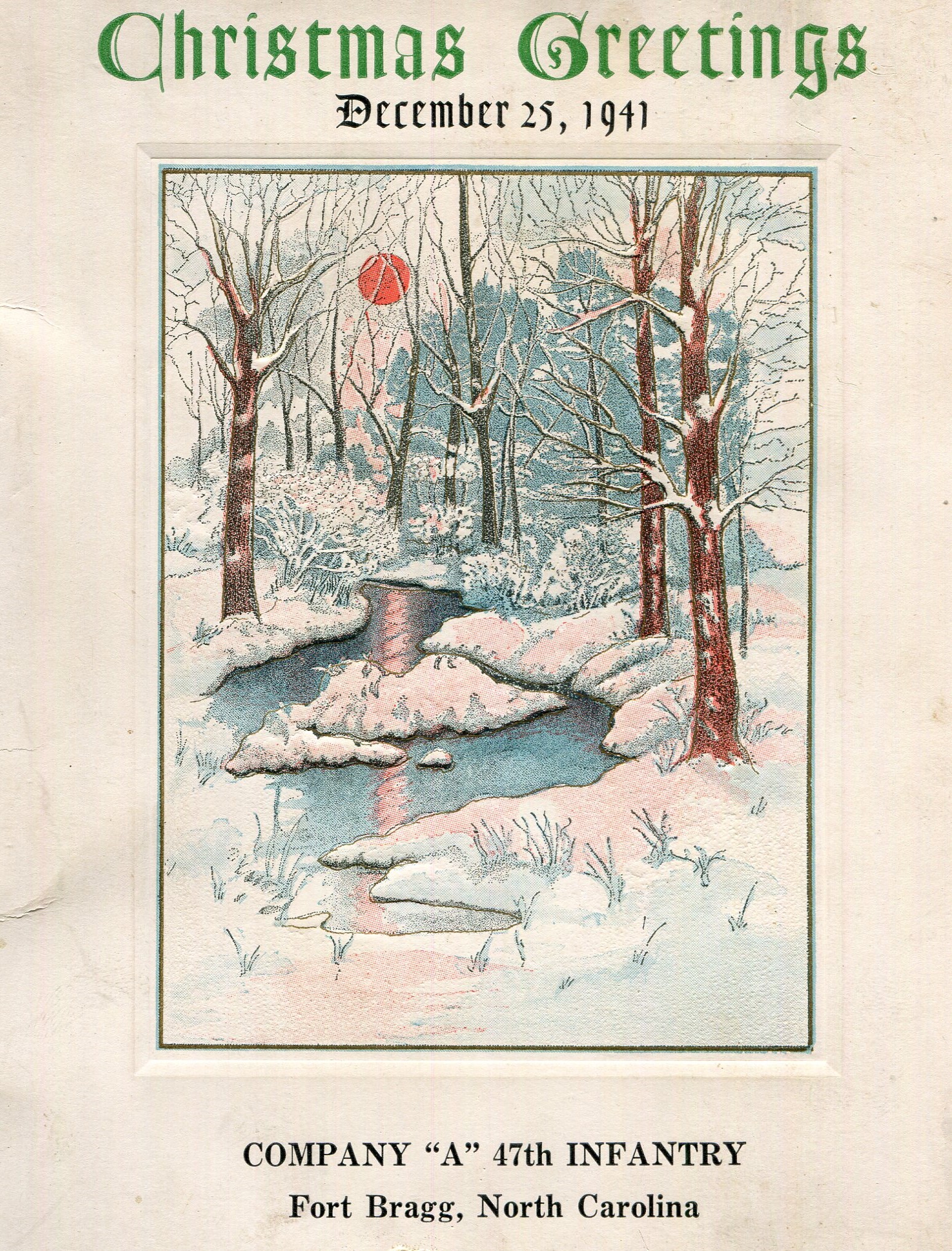
During World War II, Christmas cards sent by American soldiers to their loved ones were an important part of maintaining morale and staying connected to family and friends back home. These cards, often sent from military bases, battlefields, or even from prisoner-of-war camps, became cherished keepsakes for families who longed to hear from their loved ones during the difficult and uncertain times of war. Here are a few key aspects of these Christmas cards.
Sentimental messages of love and hope
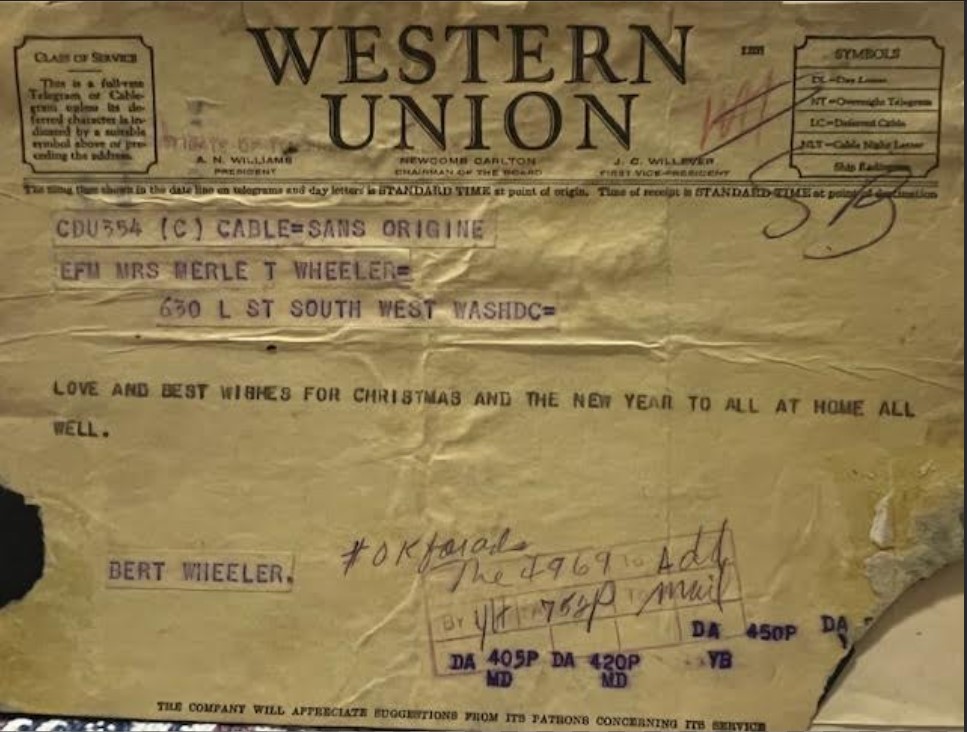
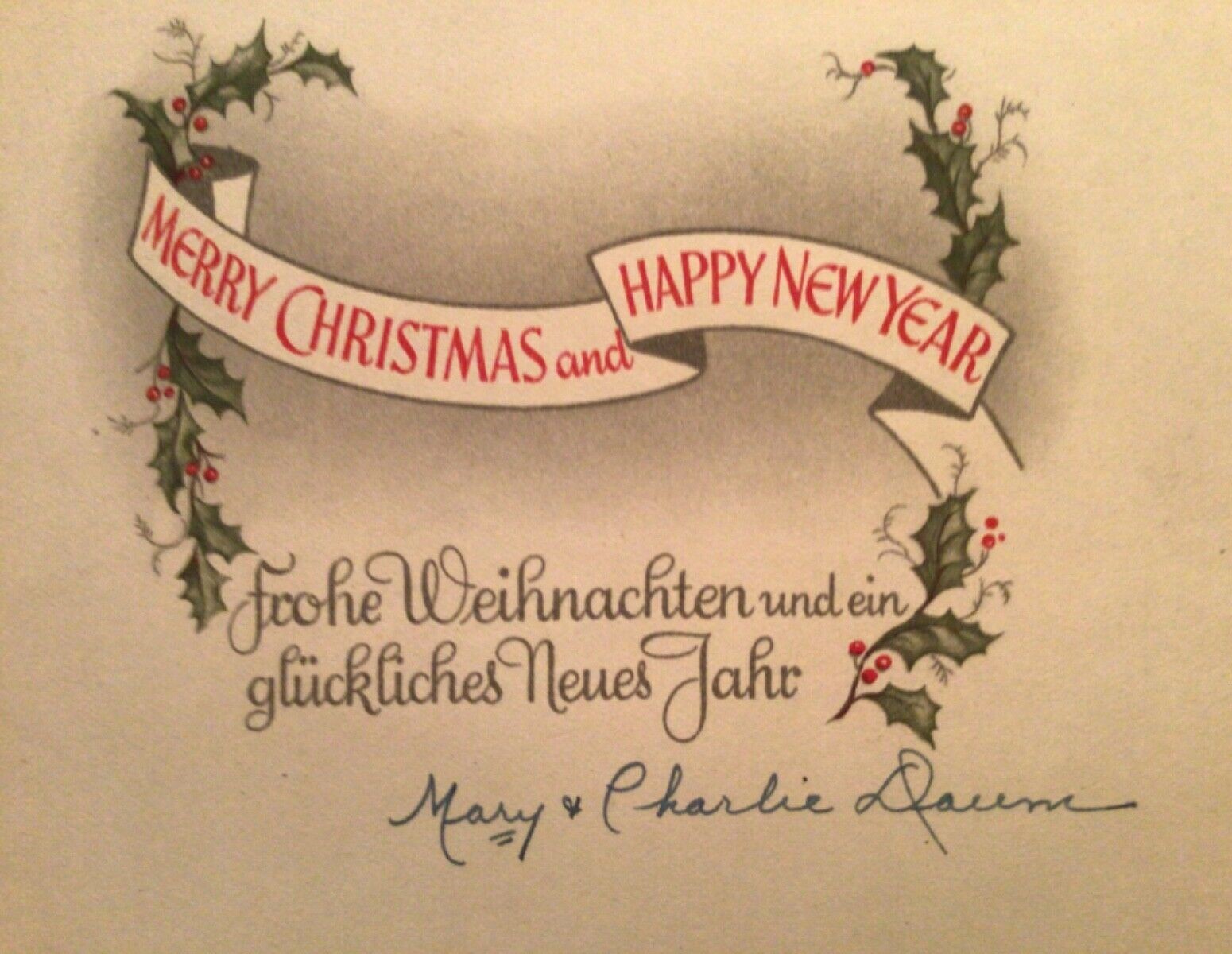
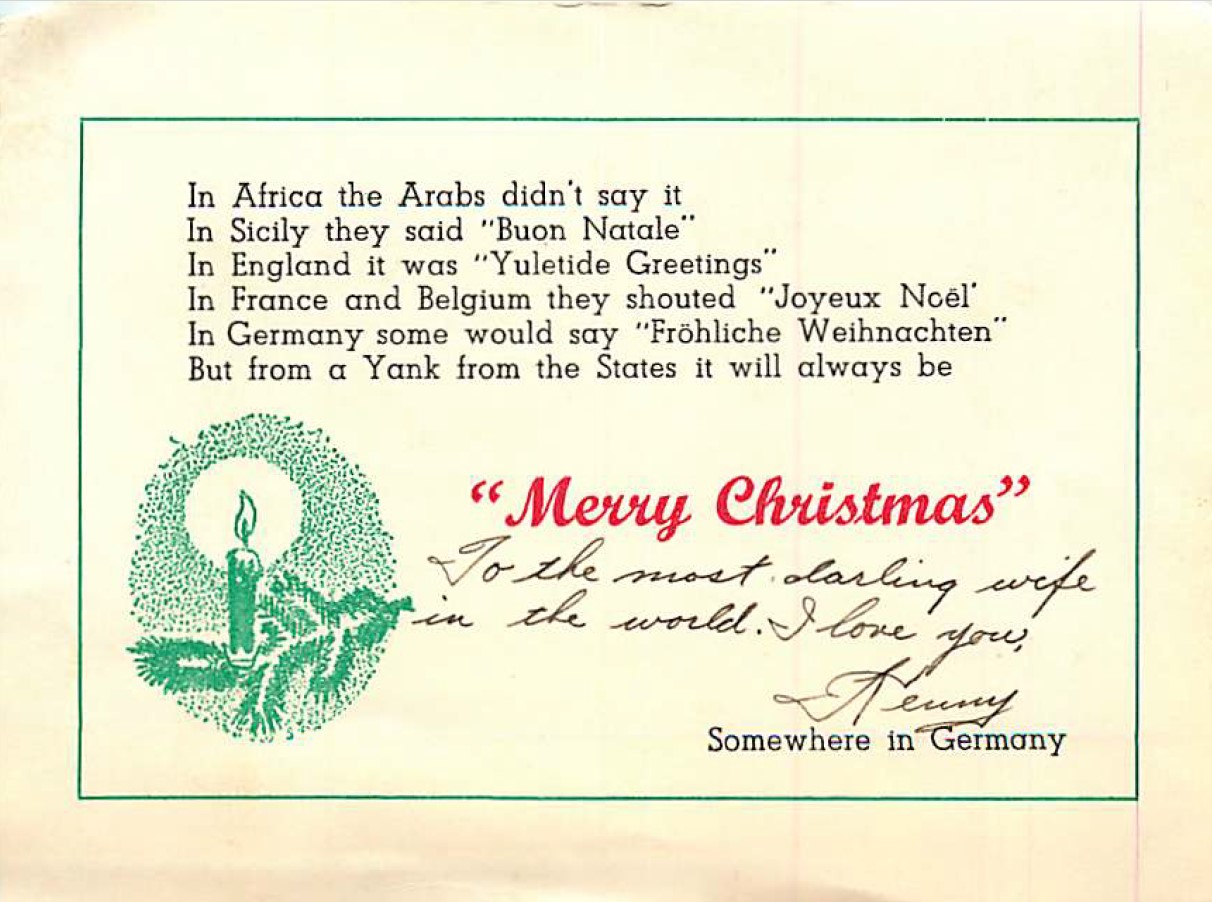
Soldiers often wrote heartfelt messages to their families, expressing their longing to be home, sending love, and wishing for peace. Many cards conveyed the hope that the war would end soon and that they would soon reunite. Some messages were brief and simple, like “I miss you and love you” while others were more reflective or optimistic, trying to ease the worries of families back home. Some were proper cards, others came in the form of a Western Union telegram.
Patriotic themes and imagery
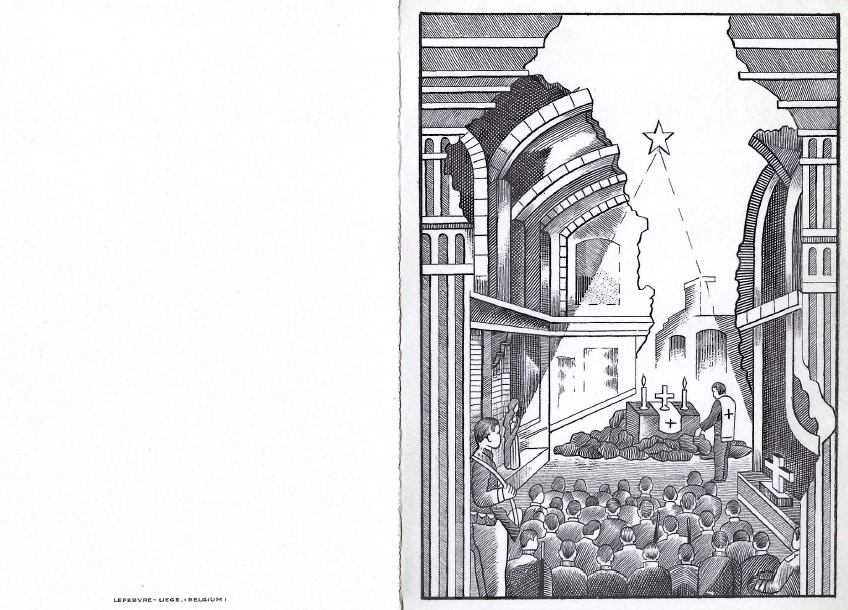
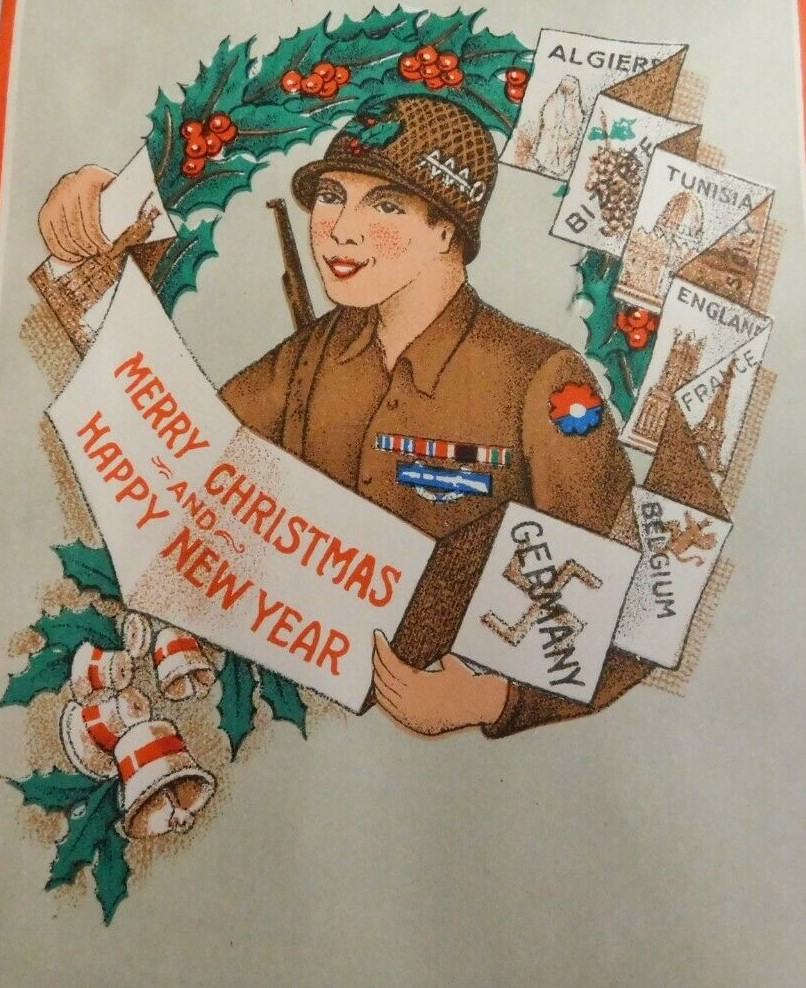
Christmas cards during WWII often included imagery that blended traditional holiday symbols with patriotic themes. Soldiers might be depicted in their military uniforms or engaging in acts of service, while Christmas trees, snowflakes, and stars adorned the cards.
Some cards featured depictions of military life and scenes of soldiers in the field, alongside the traditional images of home and peace.
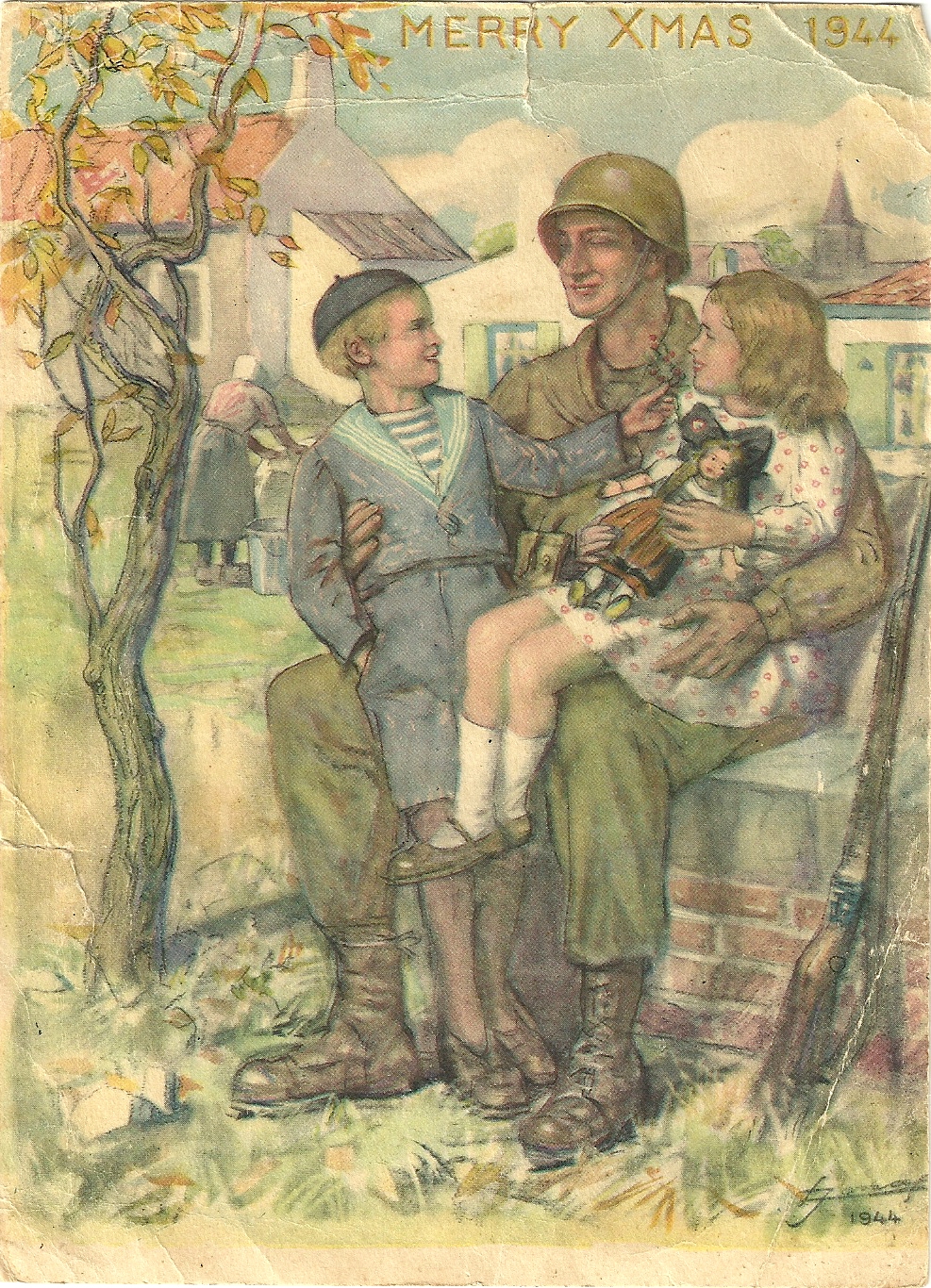
The use of the American flag and other national symbols in the cards was a common way to express patriotism and solidarity during a time of war.
Censored Message
Some Christmas cards were censored before being sent home. This was especially true for soldiers stationed in combat zones or in sensitive locations. Censors would black out portions of the messages that might reveal strategic information or any hints of troop movements or locations. This meant that while the sentiment of the card might remain, the specifics about the soldier’s whereabouts or experiences could not be shared with family.
Personalized and handcrafted cards
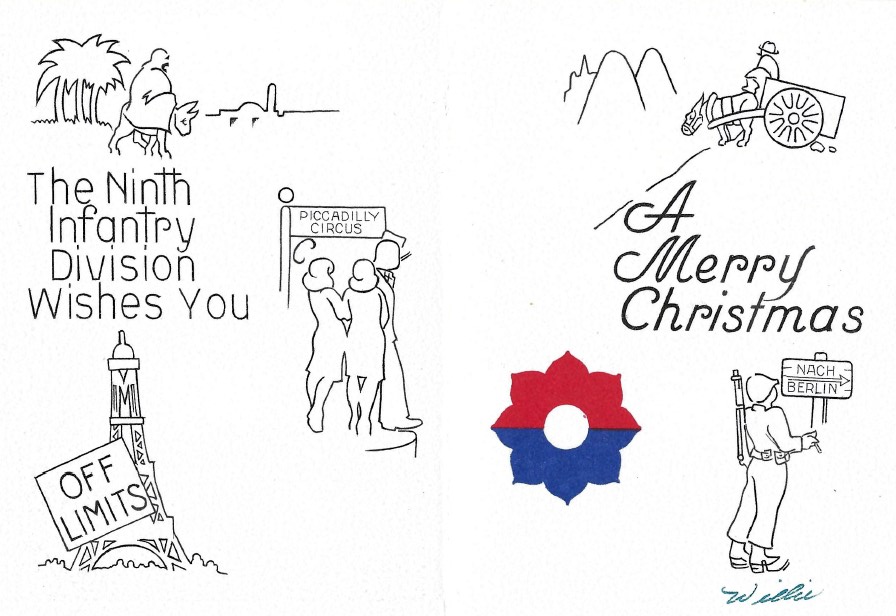
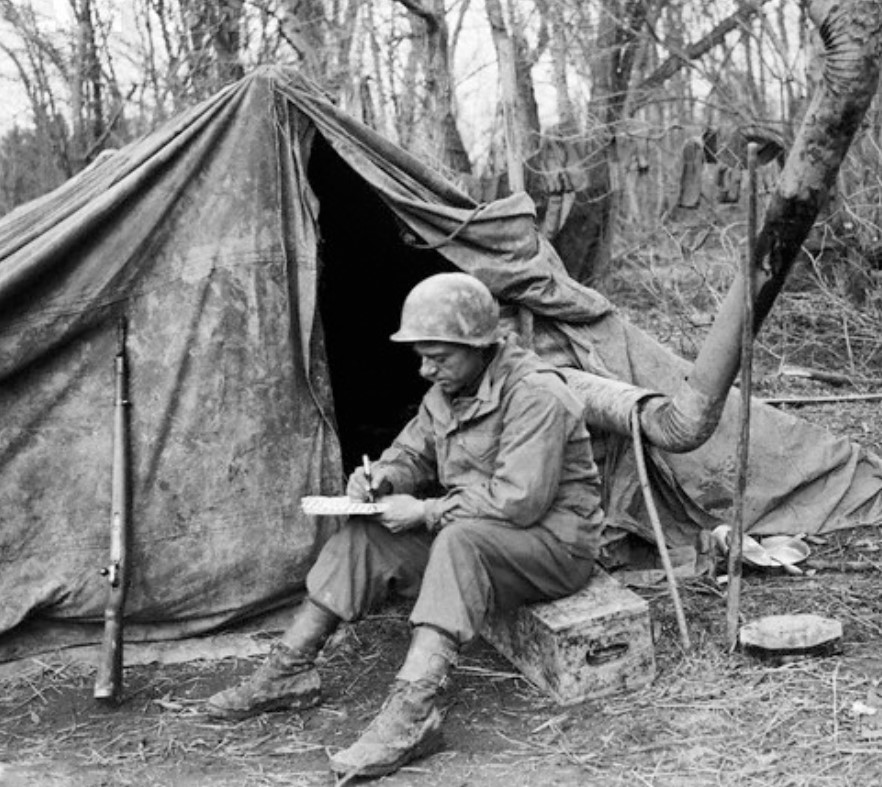
Many soldiers would personalize their cards or even create their own. Some made cards by hand, using available materials like paper, ink, and sometimes even materials like old newspapers or ration packaging.
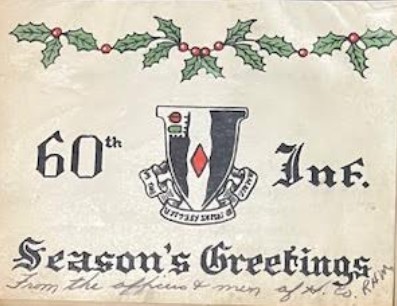
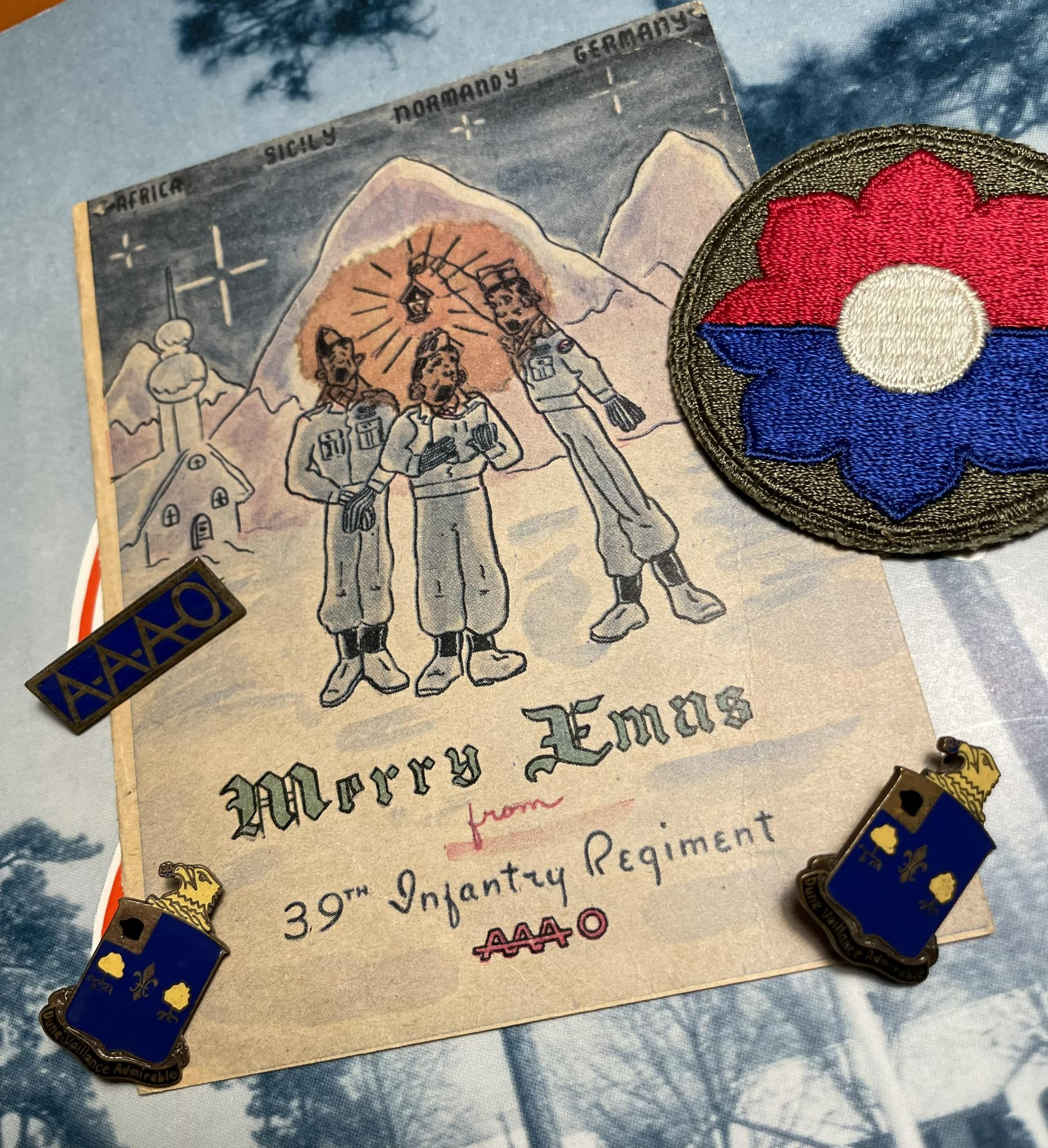
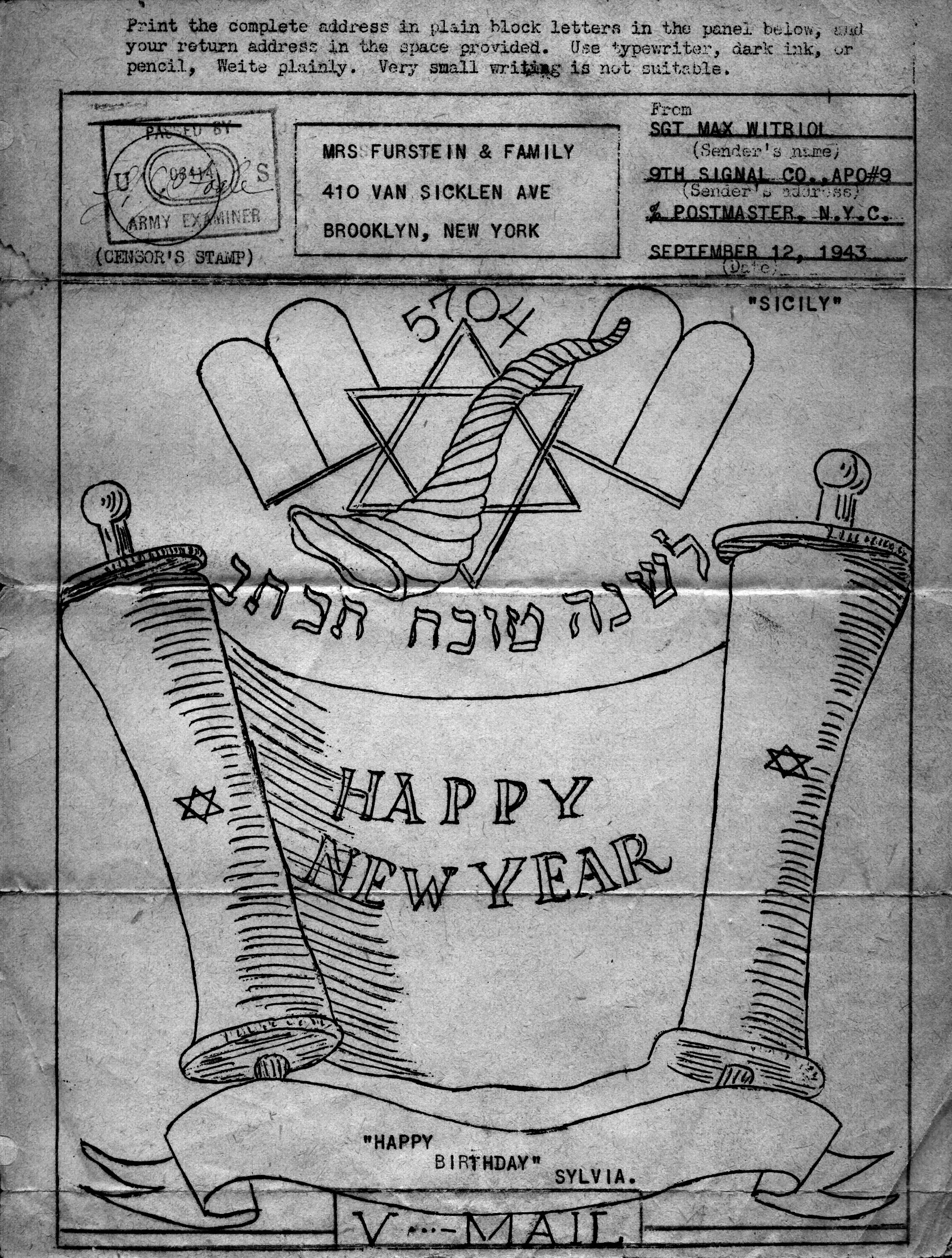
Soldiers sometimes included personal drawings or messages that reflected their unique experiences and the camaraderie they shared with fellow servicemen.
Religious themes
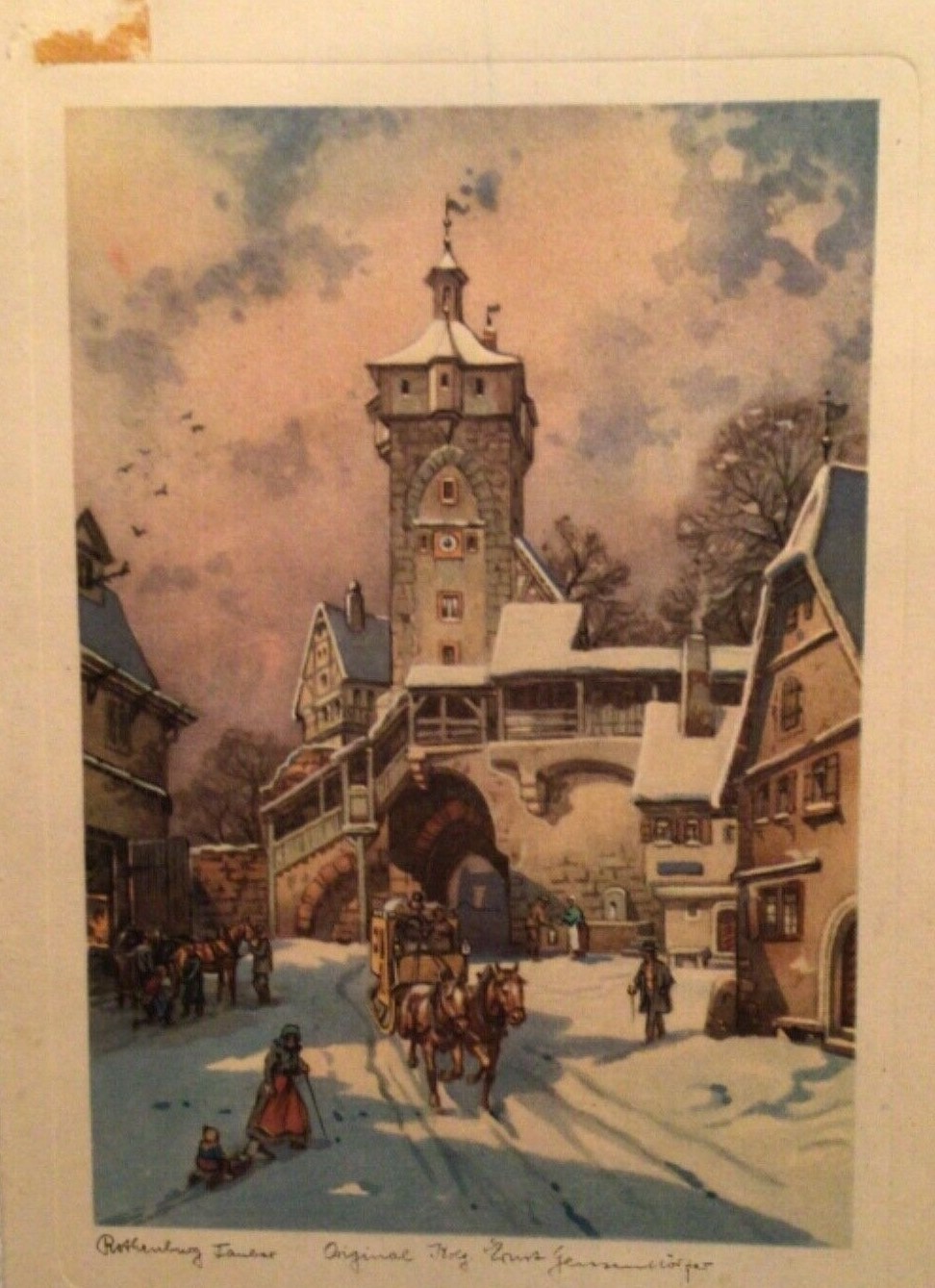
As the holiday of Christmas is rooted in Christianity, many of the cards sent by soldiers included religious imagery or messages of faith. These often featured nativity scenes, churches, angels, or Bible verses, reflecting the spiritual aspect of Christmas and offering hope and comfort in the midst of war. The prayers and messages of hope for peace, safety, and divine protection were common features of these wartime cards.
Holiday cards for families and civilians
Some cards were sent to civilians rather than just soldiers’ immediate families. These cards were a way for soldiers to maintain connection with the larger community back home and express solidarity during the wartime period. This was particularly common when soldiers were stationed far from home or unable to send direct letters.
Humor and camaraderie
Some Christmas cards reflected the camaraderie of soldiers, using humor to lighten the mood. These cards might include playful messages or jokes that highlighted the unique experiences of soldiers, even in difficult times. A sense of humor was an essential coping mechanism during the war, and it often found its way into the cards that the soldiers sent.
Commercial Christmas Cards
Many American Christmas cards during WWII were mass-produced and sold by card coDmpanies. Some of these featured wartime themes, such as “Support the War Effort” messages or images of soldiers and sailors.
Popular card companies, including Hallmark, produced special wartime editions of Christmas cards. Some included messages like “Greetings from the front” or “From a soldier’s heart to yours.”
Legacy and significance
These cards have become treasured family heirlooms for many who received them. They serve as personal mementos from a time of hardship and sacrifice and are sometimes collected by historians and museums as important artifacts from the wartime experience.
The personal and patriotic nature of these Christmas cards highlights the human side of the war, offering a glimpse into the emotions, struggles, and hopes of those serving overseas.
In summary, World War II Christmas cards sent by American soldiers home were not just a form of seasonal greeting—they were a means of expressing love, offering hope, and maintaining connections during a time of separation and uncertainty. These cards captured the spirit of the war era, blending sentiments of family and faith with messages of patriotism and optimism.
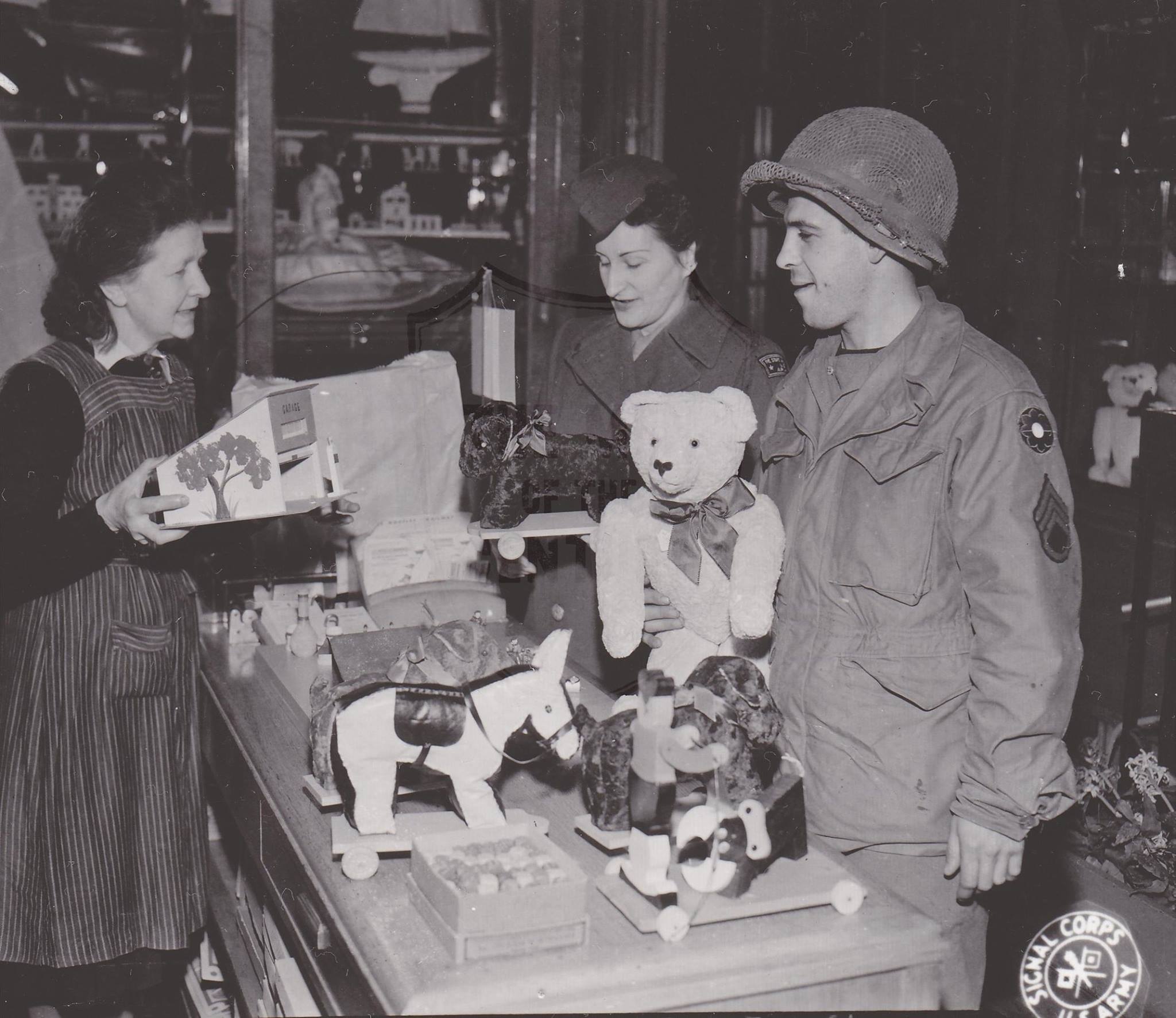
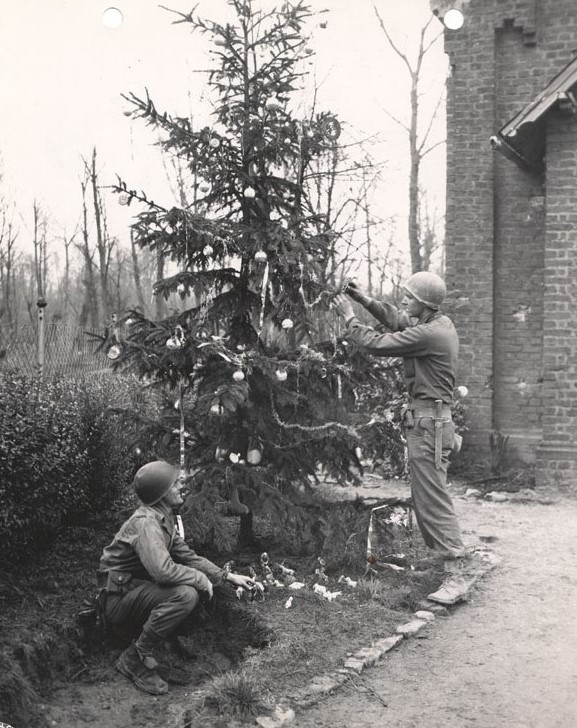
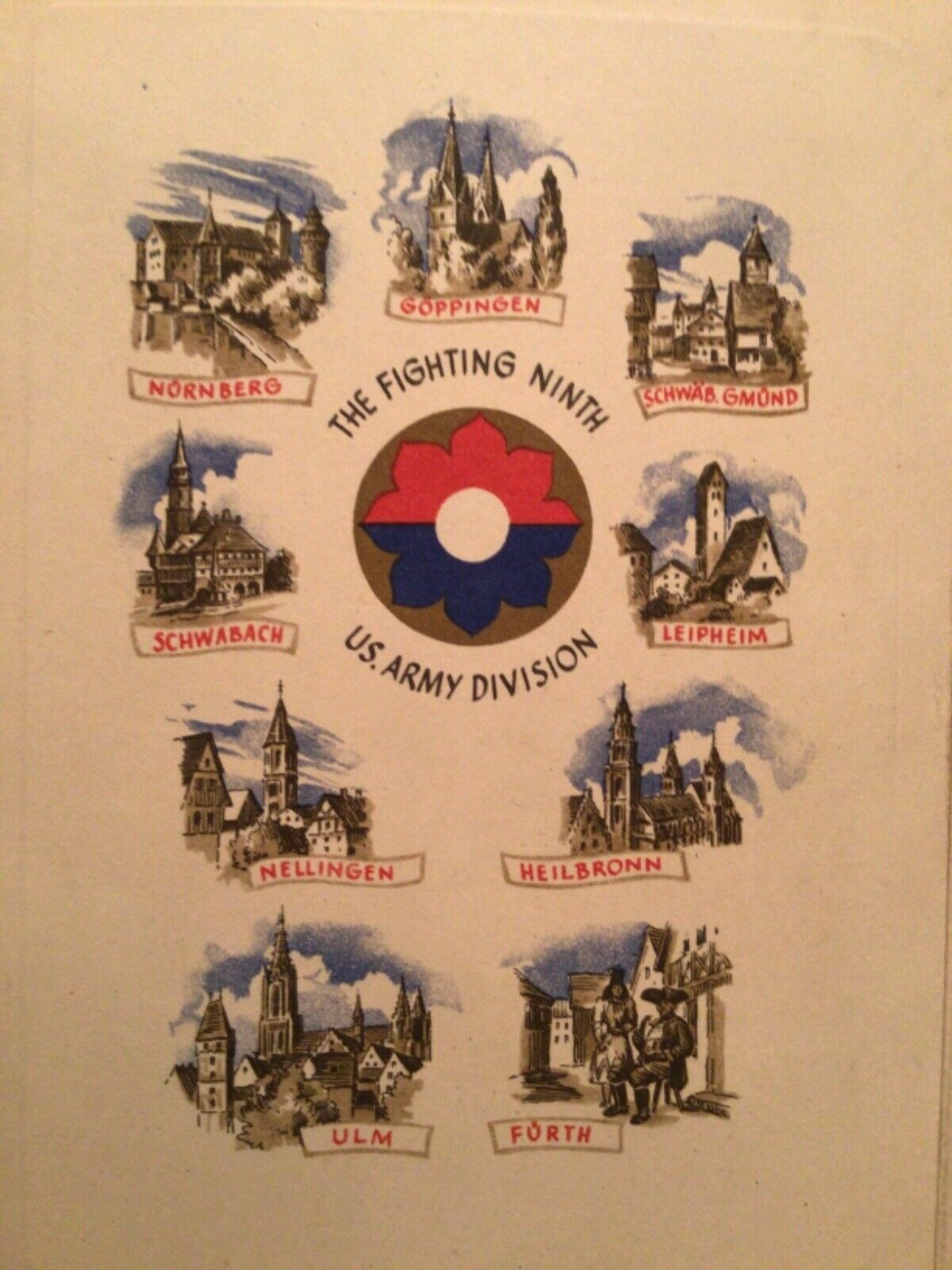
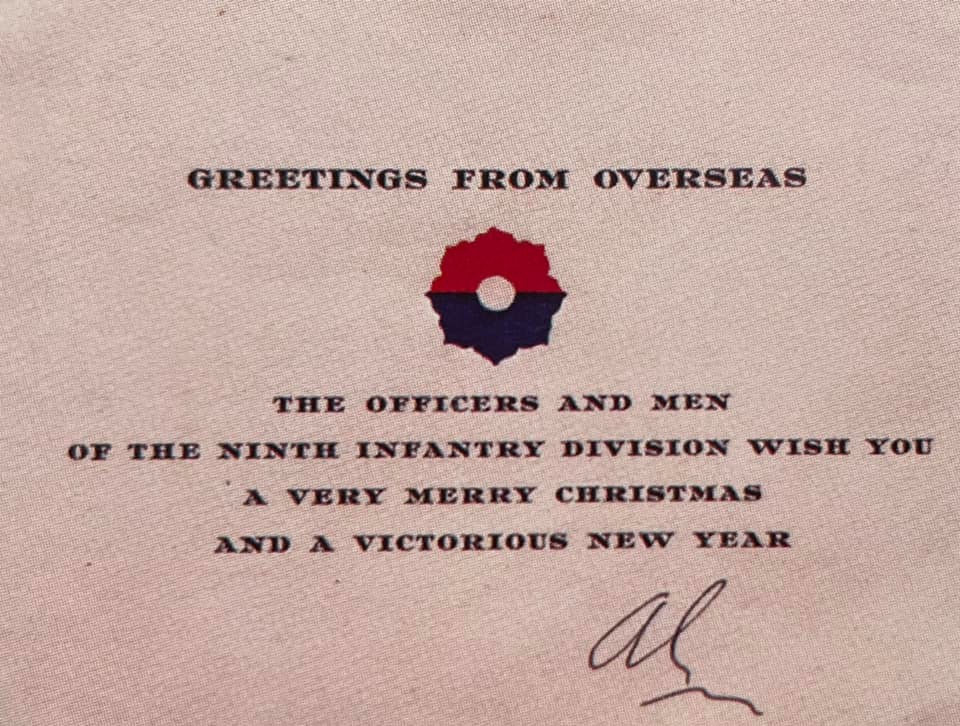
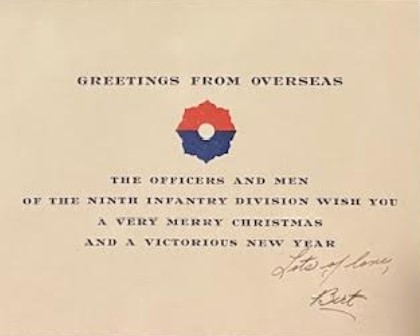
Do you have any original Christmas Cards that were sent by men of the 9th Infantry Division?
Please contact me to have these included to this page. Thank you. – Yuri
 9th Infantry Division in WWII